01What California's 70% tint rule really means
Tint is rated by how much visible light gets through: 70% lets most light in; 5% is very dark. California's 70% covers glass and film together, and factory glass already blocks some light. Federal standards only require front windows to pass 70% to begin with.
So front-door film must pass at least 88% of light by itself, be clear, colorless and made to block UVA rays, and leave the window at 70% or more. As the CHP puts it, any tinting, however light, is illegal on the front side windows.
02The windshield strip
California doesn't measure the strip in inches from the top. Its bottom edge must sit at least 29 inches above the empty driver's seat, measured 5 inches in front of the bottom of the seatback, with the seat all the way back and down and the car on level ground. So depth varies by car.
It can't be red or amber, carry solid lettering or reflect more glare than bare glass.
03Rear windows, mirrors and colors
Behind the driver, California sets no darkness limit: rear side windows can take any shade, and so can the back window if the car has outside mirrors on both sides, each showing at least 200 feet behind.
Red, blue and amber film is banned on every window. Glare limits cover the windshield strip and medical screens (35% reflective at most), and front-door film must be clear, ruling out mirror finishes there.
04Medical exemptions
There are two routes. A signed letter from a licensed physician and surgeon or a licensed optometrist lets the driver or front passenger who needs shade use removable sun screens on the front side windows. See-through ones must be green, gray or neutral smoke passing at least 35% of light, and none may be used from half an hour after sunset to half an hour before sunrise, or in poor visibility. The CHP says permanent film doesn't qualify.
A licensed dermatologist's certificate saying you shouldn't be exposed to UV rays allows clear, colorless film passing at least 88% of light on any window, if glass and film together still pass 70%. To get either, ask your doctor for the signed letter or certificate and keep it with you; no DMV permit is needed.
05Headlight and taillight film
California bars any grille, clear lens cover or other obstruction in front of a headlight lens on cars made and first registered here after Jan. 1, 1968; the CHP treats aftermarket add-ons there as unlawful and says headlights must shine white. Tinted headlight film isn't street-legal.
Taillights must glow red and be plainly visible from 1,000 feet on cars built after Jan. 1, 1969; brake lights, from 300 feet, day and night. The CHP treats see-through covers over the lens that dim them or change their color as unlawful unless the lamps clearly still comply.
06If you're pulled over
Tint is an equipment rule, and a violation is an infraction. The law generally lets you sign a promise to correct it, often called a fix-it ticket, then show proof of the fix by the notice's deadline, no more than 30 days out.
The officer can skip that for evidence of fraud or persistent neglect, an immediate safety hazard, or if you won't or can't fix it promptly.
07How Tint Monsters helps
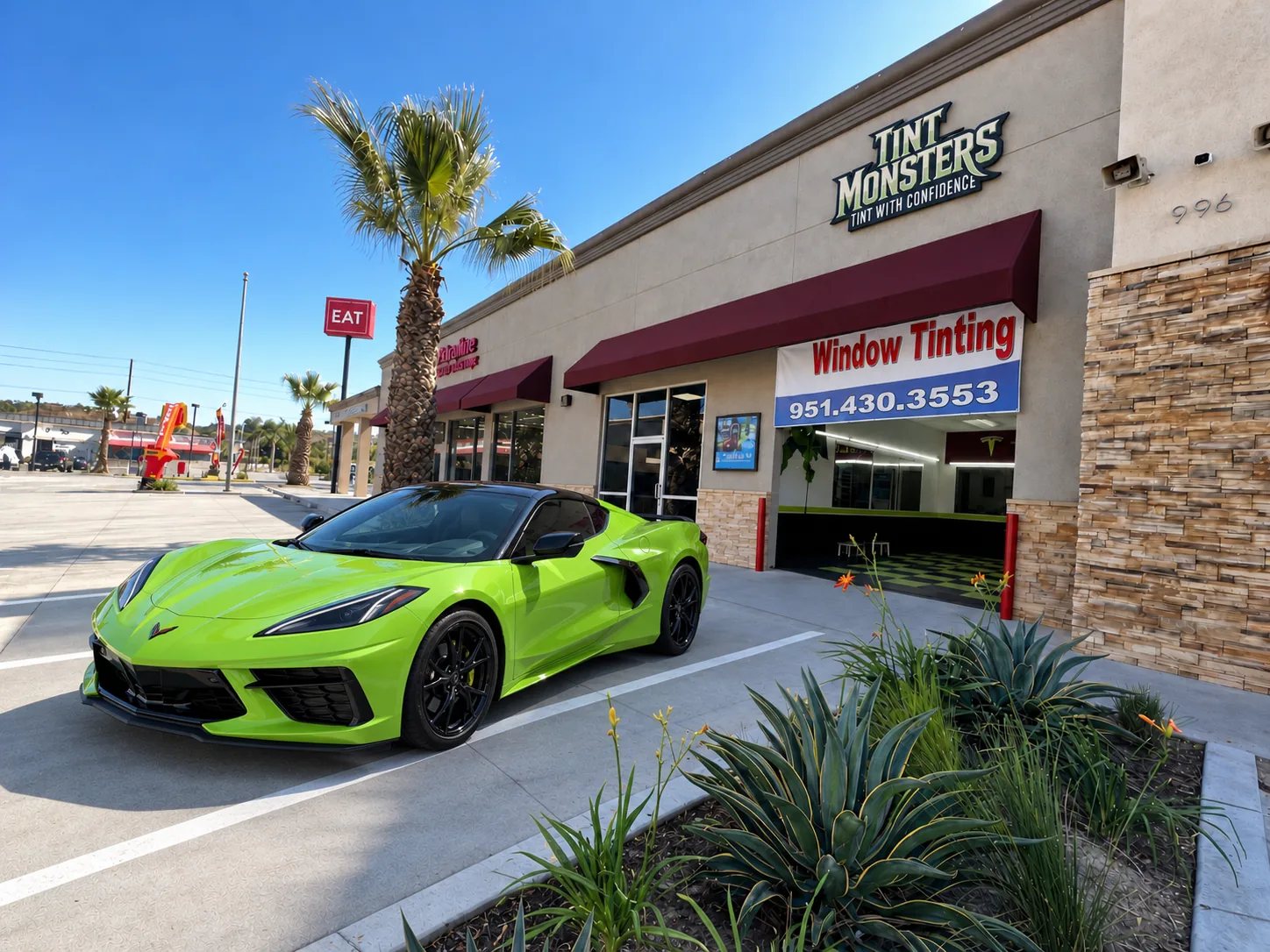
Before we cut any film, we check your shade against California's rules for each window, and we'll tell you what's legal before anything is fitted. Questions about a medical exemption? Bring the paperwork to our Menifee or Norco shop.